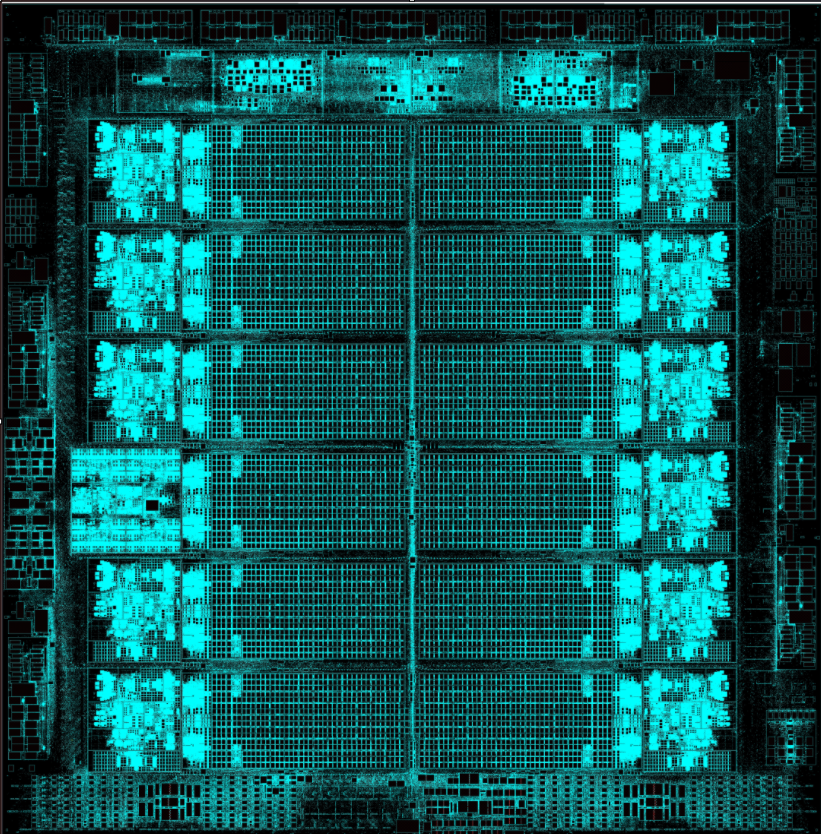
Last month at Hot Chips, the annual semiconductor symposium held at Stanford University, IBM announced plans to design a single microprocessor architecture that will run both mainframe and ARM instructions.
The new chip will underpin future generations of IBM Z & LinuxONE mainframes. Revenues for the platform tend to be lumpy – but in 2025 they hit a 20-year high.
My colleague Rachel Stephens asked: “writing about hardware?”. My reply – yeah hardware for software, it’s all about systems.” The current appetite for hardware innovations and investments is greater than it has been in years. Software ate the world, but now AI is eating compute, which means hardware is very much back. Just look at NVIDIA.
This innovation here isn’t about emulation, compatibility mode, or two separate cores on one chip. Nope – each core will be able to run either instruction set. One microprocessor – two different instruction set architectures. The new chip would open up the long tail of Linux and open source applications to the mainframe. IBM has been on a multi-decade drive to make the mainframe more and more open. Red Hat and SUSE have run on the mainframe since the turn of the century. Historically IBM has ensured third party support by working with open source directly (Postgres, MySQL, Apache Cassandra) and with commercial companies (MongoDB, CockroachDB, MariaDB). But you can only do so many deals with third parties – and porting, and maintaining ports, is relatively expensive.
By supporting ARM, IBM can shortcut the process. Hyperscalers are investing heavily in supporting software on ARM, for example, AWS with Graviton. IBM will be in a position to piggyback on this work to run more apps and infrastructure with much lower porting overheads. Furthermore, IBM claims the architecture will allow ARM-based apps run alongside Z/OS apps, and to take advantage of mainframe hardware reliability, security and availability guarantees. The amount of error correction engineering, both hardware and software, in mainframes is staggering, which is why the mainframe is a byword for reliability.
This is not going to be an easy engineering task. There are some clear technical differences – for example the big endian format IBM mainframe chips use compared to ARM’s default little endian format. This endianness is about where bytes are stored in memory – it’s an esoteric question, but crucial in systems design. There are going to be any number of decisions to make about how to bridge architectural differences, which is one reason the project is so fascinating.
A side note – there is some (ancient) history here: back in 1994, IBM announced the PowerPC 615, designed to support both PowerPC and x86 instructions – but the chip never made it to production, largely because Microsoft had little interest in the architecture.
IBM and ARM had actually first announced a strategic collaboration back in April, but Hot Chips was the coming out party, where more details were announced. Assuming IBM can get the chip into production, it raises the question of what else IBM might choose to run on ARM – it could for example choose to deprecate some of the ported environments it currently supports.
ARM support should enable end users to run a broader range of applications while continuing the effort to make the mainframe as open as possible. In the AI era this could prove even more important – the pace of software development is only accelerating. IBM will want to be able to offer support for new AI, and AI-built, platforms as quickly as possible. On that score IBM also announced the chip will support High Bandwidth Memory 3e (HBM3e) at terabyte scale, which IBM claims will enable it to run inferencing workloads more efficiently.
Bringing IBM engineering closer to ARM aligns with the broader industry direction. Despite IBM’s long-standing journey with its own chips, the momentum of ARM in the hyperscaler era is undeniable. (Even) more open mainframes present an interesting trajectory worth keeping an eye on.
I have been a mainframe watcher since the beginning of my career. Now I have joined the greybeards, and still find IBM’s mainframe engineering story fascinating. ARM is just the latest chapter.
Disclosure: AWS, IBM, MongoDB and Red Hat are clients.
No Comments