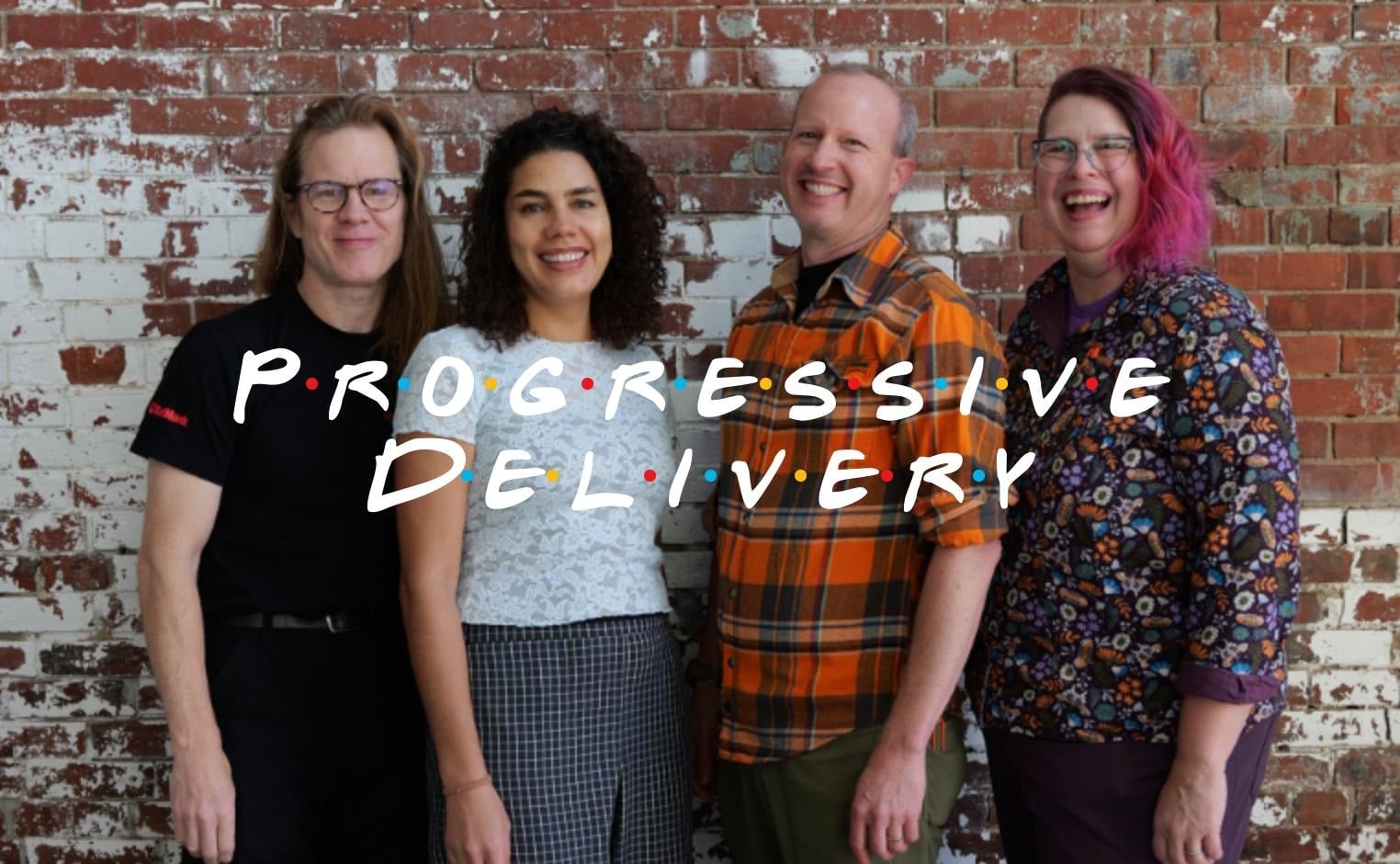
It’s been a long time coming but the book has finally shipped. I am super proud to have worked with my co-authors Adam Zimman, Heidi Waterhouse, and Kimberly Harrison to deliver something that I think is going to be really useful to people. I can’t think of a better publisher than IT Revolution. I mean if you’re in the same stable as Accelerate and The Phoenix Project, you know you’re doing something right.
We wanted a strong analytical framework and great case studies and that’s exactly what we’ve got. We also wanted to cast a fresh eye on engineering and product management disciplines, putting the user first but really thinking about the business of software delivery and how to improve it. In the book for example we think about the third loop. It’s not enough just to have dev and ops. You also need the user in the frame. So much of the foundational work in defining modern software delivery was established before we had the world’s computing resources at our fingertips in the cloud. Before we had infrastructure as code as a guiding principle. Before we could really model and accurately codify every single element in our IT estate. Before we had accepted the primacy, even, of engineering and software developers in delivering new digital products. Before we could do real user monitoring. Before we could easily do dark launches using purpose built platforms. Before observability had brought all of the signals together that we would need to build, operate and iterate more effectively. We therefore established a framework based on the world as it is now, and the new requirements and capabilities, based on 4 key tenets – Abundance, Automation, Alignment and Autonomy. The past is a different country and the new country is progressive delivery.
Good business books need great case studies. And to that end we did really well. To have engineers from Amazon Web Services, GitHub, Sumo Logic, and Nike share knowledge and experience with us about the way they had built systems that put the user first, that would enable them to roll new services out to specific cohorts in controlled ways before broader rollouts, reliably, safely and quickly. Yeah that was super exciting and we’re so glad that we were able to include them in the book.
At its core, Progressive Delivery exists to serve a fundamental purpose that can be distilled into a simple yet powerful statement: delivering what users need when they need it at the least cost and risk to everyone involved.
This is perhaps the manifesto of Progressive Delivery—not a description of its methods but a declaration of its ultimate goal. It captures the essence of what we’re trying to achieve when we implement these practices. By keeping this goal at the forefront of our thinking, we create a clear criterion against which all of our technical decisions, organizational structures, and delivery practices can be measured.
When we center our work on this purpose, we naturally align our teams, our technologies, and our processes toward creating value rather than just producing output. It transforms software delivery from the mechanical process of shipping features to a thoughtful practice of providing solutions that genuinely help people accomplish their goals.”
– Progressive Delivery: Build the Right Thing for the Right People at the Right Time.
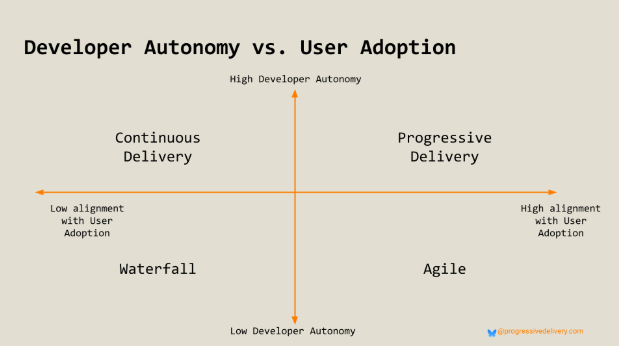
So Progressive Delivery is partly about developer and team autonomy, supporting alignment with the business. But it’s also very much about user needs. One of the great advantages of abundance is that we can run multiple versions of applications and services, and in some cases let the user decide when they’re ready to migrate to a new service. We need to put the user’s needs first. Now of course, great design and great product management are about bringing the user on a journey, and helping them find and enjoy new ways of working and playing. But jerking them around is not the way to do it.
So yeah, I’m pretty excited about the book. If you’re building digital products and services it will give you some important food for thought, and perhaps make you rethink some of your assumptions. Copies are available at Amazon and even book stores, which feels pretty wild. When you read it please review it too – that would be super helpful in getting the word out!
If you’d like to discuss Progressive Delivery, or have me or one of my co authors present these ideas at your conference or event please let me know.
No Comments