In this conversation, Stephen O’Grady and Rob Hirschfeld discuss the complexities of bare metal automation, the role of platform teams, and the importance of observability and governance in managing infrastructure. They explore the challenges of integrating open source solutions with bare metal and emphasize the need for specialized support in this area. The discussion highlights the evolving landscape of infrastructure management and the necessity for collaboration and expertise.
This video is sponsored by RackN.
Links
Transcript
Stephen O’grady (00:04)
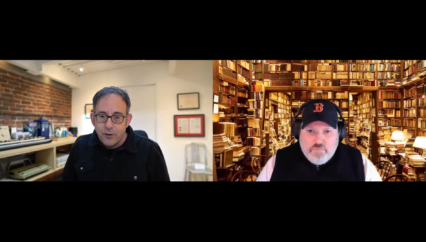
All right, good morning, good afternoon, good evening. I am Steve O’Grady I am the co-founder of RedMonk and I am here today with Rob. Rob, would you like to introduce yourself?
Rob Hirschfeld (00:13)
I would be happy to. My name is Rob Hirschfeld. I am CEO and co-founder of RackN, a company that specializes in bare metal automation software. So we help companies that are running every scale infrastructure, including the absolutely largest, do a better job running that infrastructure without having to take it over from them or remove their ownership and agency in having that infrastructure.
Stephen O’grady (00:34)
Awesome. All right. So we’re here to talk about bare metal, obviously. So infrastructure and platform teams, and we’ll even get to sort of open source and kind of where all of that intersects.So let’s just start with a simple basic question.When you talk to folks in the field, know, prospects, customers, and sort of other teams, what are you seeing from platform teams that are building on top of bare metal? Where do think they’re at?
Rob Hirschfeld (01:03)
You know, I love the question. Technically everything runs on bare metal. We sort of forget about this in the cloud era that there is a server at the bottom turtle is a server somewhere. So everything, but in reality it isn’t like everybody can or wants to put every workload directly on bare metal. I keep seeing these articles about you know, Kubernetes, you know, not better on bare metal and they’re right.
I agree with that. The things we see on bare metal are two primary workloads, virtualization workloads and AI workloads. When it comes down to it, people then build on top of the virtualization everything else. That’s the universe of where we go. It’s a reasonable position. If I was trying to be an app dev team and a platform team and trying to really accelerate my company.
Stephen O’grady (01:49)
Okay.
Rob Hirschfeld (02:01)
forcing everybody to deal with the complexity of bare metal and networking and BIOS configuration and keeping everything patched and all of the extra work you have to do to get an OS deployed, that’s not useful work. That’s toil by definition. so platform teams shouldn’t be trying to throw that in front of people unless they have a real reason to.
Stephen O’grady (02:14)
What, which is actually, that’s the perfect segue to the next question, which is, you know, so, based on those experiences, when you, you know, sort of if you’re having a conversation with platform teams, you know, is it, is it a fair question to ask like, Hey, is this something you want to be doing? Right? Is this fun or entertaining for you or, perhaps, you know, are you differentiating for your company? I mean, is that, are those questions that you ask or those conversations that you have with platform teams?
Rob Hirschfeld (02:41)
Thank I love that you’re using it, the word fair is a really interesting word for this.know, and because platform teams, think.
They get sort of tangled up in what a platform team means and what they should be doing. I think about team topologies and what Forna and Nelline were trying to do with that book. To me, that’s the basis of a lot of the platform team question. And I see platform teams and companies that we deal with as the real job is facilitators. So they are trying to make it easier to accomplish the tasks for the teams that they’re supporting.
or some business function team. But I think there’s another piece of the whole platform team question that gets overlooked a lot, which is governance.
Stephen O’grady (03:44)
Okay.
Rob Hirschfeld (03:44)
I think the companies that I’ve seen do platform teams really well think about the platform team not just as a facilitator, but as a governance team. And so their goal is to help their teams not just do their job better, but to follow common patterns to improve governance, because there is a governance dividend. And so from that perspective, I don’t think it’s fair.
Stephen O’grady (04:01)
Right. Yep.
Rob Hirschfeld (04:11)
to have a platform team trying to go deep into a bare metal infrastructure, right? Back to team topologies, that’s a specialty. It actually is a silo where there’s specialties, there’s things that you do on top of that and the way you need to think about it. And so we really do have to look at, you know, how does a platform team hand off bare metal to as an expertise rather than trying to own it as infrastructure?
Stephen O’grady (04:37)
Mm-hmm.
Rob Hirschfeld (04:41)
not as easy to manage a bare metal cluster as a virtual machine cluster. And we could spend an hour talking about all the challenges that we add in that.But just as a placeholder, it really isn’t fair to expect somebody who can just create and destroy a virtual machine and do it from an immutable image without any thought and network it correctly to then go and have to deal with a system that has none of those attributes.
Stephen O’grady (04:49)
Yep. Fair. All right. So one of the other angles that I think, you know, it’s certainly come up in conversations that we’ve had, right? Is questions around monitoring, observability, et cetera. You know, it’s funny. I was at KubeCon talking to a vendor in the observability space and they were joking that, we’re one of 24 observability vendors here. Right? So that’s
Obviously mandatory, it is something that is top of mind for enterprises and devs alike. So as a key feature to modern platform, in your view, what’s the state of observability of monitoring and so on from a bare metal standpoint?
Rob Hirschfeld (05:48)
goodness. I’ve been expecting and waiting for observability to come into bare metal. We’ve always expected that when we work with a customer, they’re going to get all the bare metal set up correctly and then tie the monitoring of bare metal into their observability platform so they can get an integrated system. I’ve come to accept that that dream is probably not even, it’s not going to happen and it might not even be practical for it to happen.
Stephen O’grady (06:17)
Okay.
Rob Hirschfeld (06:18)
Because I think observability from an app dev perspective means something different than it does from a bare metal infrastructure perspective.
And so what I’ve started to see, and I think this is even more important in the AI workloads that we’re seeing, is that bare-metal observability is really its own system. And it’s okay to run a second system, and it’s okay to monitor the hardware infrastructure, sort of like we used to do a long time ago, with better graphs and understanding of what’s going on in the system, but not try to put those things together. I actually think that we have held customers back from having
Stephen O’grady (06:52)
Mm-hmm.
Rob Hirschfeld (06:59)
good observability system by expecting that they would tie them together.
Stephen O’grady (07:04)
Mm-hmm.
Rob Hirschfeld (07:07)
I love to think of bare metal as a gleaming integrated part of everybody’s infrastructure, but just your question about platform teams is classic. It is okay for some things and some specialties to be a little bit more siloed and to have the systems that they need and then treat it as a service interface, even inside of a company where you’re providing a service to somebody through an API with a nice boundary. That is actually a benefit. Our customers who are moving most quickly have an integrated system and that’s okay for them.
Stephen O’grady (07:41)
Yeah. Yeah, all fair. And all right. So so last thing that we’ll sort of cover here, we’re talking about bare metal and sort of the intersection of these things we mentioned at the top is open source. Right. So any of the workloads we’re talking about here, you know, obviously, it’s sort of on on top of bare metal, they’re going to have huge components of them and huge swaths of that infrastructure are going to be open source or based on open source. And in your experience, and from the conversations you’re having and
Rob Hirschfeld (07:51)
Yeah.
Thank you.
Stephen O’grady (08:07)
your outlook. What is the role of open sourcewith respect to bare metal? Where does that fit in? Or does it not fit in?
Rob Hirschfeld (08:13)
my goodness. I’m going to have to watch over my shoulder. No, I’ve come a long way in my journey for open source. I was on the OpenStack board for years and yearsin the early, early days of Kubernetes.And so it’s been hard to watch how we redefine how we think about open source and what it means for everybody.
Stephen O’grady (08:40)
Yep.
Yep.
Rob Hirschfeld (08:42)
So here’s my challenge.People buy servers, they buy data center space, they pay admins and operators. And the idea that you’re going to have an open source community figure out how to run a data center.
I think that’s a tricky thing. We’re not talking about software at this point. We’re talking about expertise and operations. And unlike software, servers are all little bespoke. We want to talk
The reality is every server, its networking, its storage configuration, it has unique identity. It has to be managedin a specific way. And if you’re buying a server from any one of the OEMs, the next month you could get a server that has different behaviors in it. And that reality makes it very hard to create community software.
And so I’ve really struggled with how do we encourage community and sharing and reuse inside of operations communities. And I haven’t seen a way to do it that didn’t involve a commercial transaction.
Stephen O’grady (09:55)
Okay.
Rob Hirschfeld (09:55)
And I don’t, there’s a lot of open source people like, want this to, I want to get this, all the software and all this stuff free. But in every case I’ve seenopen source work, it’s involved somebody ultimately paying support.
Stephen O’grady (10:10)
Okay.
Rob Hirschfeld (10:10)
That’s what distros are for. We pay for that support to maintain these systems. What I’ve seen over and over again with bare metal is people try to use a couple of open source tools and then cobble it together. They end up building their own system. They have to support it internally. It ends up very fragile. They end up locked to an OEM because they can’t change the integrations or it’s very hard to do it. It’s not a business value to anybody. If you talk to a CIO and say, I’m sorry, we’re to be six months late because
Stephen O’grady (10:35)
Mm-hmm.
Rob Hirschfeld (10:40)
We have to recode all of this bare metal integration work that we handcrafted. It’s not a very winning message. And so, you know, for what we’ve done at RackN, our priority was on how do we take the automation that does all the configuration, all the setup, all the networking topology and OS configuration, image of all these things that people have to get done to build a real platform.
and we’ve made that part of the software, part of the package. Based on my history, I would love to be able to say, yeah, that’s just all out in the open and we can do it. But people are going to call us up and say, wait a second, the Dell, this doesn’t work with that and all these things. That’s fundamentally a support motion on day one. If you’re in a support motion on day one,
Stephen O’grady (11:09)
Okay.
Yeah.
Yep.
Rob Hirschfeld (11:31)
That is you’re already in a commercial transaction. And so I know people really want all this to be open and free and we use a ton of open source and we leverage it. Where it’s repeatable and fast, it works really well. When you walk into the landscape of bare metal where there’s pits and traps everywhere.
Stephen O’grady (11:39)
Yeah.
Yeah.
Rob Hirschfeld (11:51)
Those are things that require that deep support and knowledge. So I wish we could see more things emerge in this, but we’re helping companies run data centers and that’s a paid business.
Stephen O’grady (11:56)
That’s fair. That makes sense. All right, so let me see if I can, just as a sort of way to get you out here, is it fair to say if you are a platform company and you are looking at challenges involving bare metal, it’s okay to ask for help? that a fair statement?
Rob Hirschfeld (12:13)
Yeah. I will tell you based on observation that if you don’t ask for help, you’re going to be spending a lot of time spinning your wheels, building things that aren’t repeatable, that don’t scale.
It is a specialty and there’s a reason why the hyperscale cloud vendors spend so much time doing that work. It’s actually a reason why the things we hear from the AI companies is that they’re taking a long time to get infrastructure online and patched and turned over.
So, know, I actually think the platform teams need to think about, you know, the platforms that they’re using and realize that they should be building platforms below, just like they’ve paid for, you know, a lot of companies pay for VMware or an OpenShift virtualization platform or Nutanix, right? Those underlying platforms add value because they standardize process and governance.
you know, back to my thought about platform teams, right? The first order business of platform teams is really governance. so they should look for governance above where they are, but also below.
Stephen O’grady (13:35)
Okay, with that, we will conclude for today. Rob, just want to say thanks so much for coming on and talking, well, platform teams and bare metal, and all that.
Rob Hirschfeld (13:44)
My pleasure. It’s always a pleasure to to you, Steve. Thank you.
Stephen O’grady (13:46)
Awesome, cheers.