Well over a decade ago, hundreds of conversations over a period of years crystalized into a book called The New Kingmakers. The core thesis of the book was simple: a constituency long thought to be powerless had become instead the real power behind the throne, the anointer of queens and kings. For decades, developers that were considered little more than mechanics with pocket protectors emerged not only as the arbiters of what software got used and what software did not, but a true competitive weapon that could be the difference between success and failure in an increasingly technical world.
This gradual realization spurred developer salaries ever higher, with extreme measures like aquihiring developed and deployed to obtain high end talent in a hyper competitive environment.
The New Kingmakers was intended to capture that moment in brief, to lay out the case for developer importance not for the developers themselves – they largely already understood the landscape and their place in it – but for executives who were still operating as if developers were fungible, undifferentiated resources. The book was written to document and describe a world in which developers were the essential conduit between idea and code that would bring that idea to life.
That world isn’t gone, exactly, but it looks a lot different than it did last year. Or, arguably, last month.
All of this began innocently enough. In the 1960’s, the first automatic text replacement implementation – spell checkers – began to emerge. They looked up typed content against a database of proper spellings and would suggest corrections. Over the course of the next two decades, this technique was applied to source code, which not only assessed partially typed code against the specific semantics of a given language but attempted to predict it. By 2019, almost sixty years later, TabNine and others began not just checking code against static libraries of text or grammar, but using AI for neural code completion. In 2021, GitHub advanced that with LLMs and took that concept mainstream with Copilot, which didn’t merely assist in spelling or structure, but would actively suggest and complete code based on inferred intent. It was incredible and mind blowing at the time, but it was still essentially autocomplete, which meant it required the user to have at least some ability to write code.
The release of Chat-GPT a year later, however, was another step-function change that set the industry on the path it remains on at present. It was no longer necessary to start from code within an editor. Instead, it introduced an even higher level of abstraction – the prompt. Every programming language is essentially a means of giving a computer precise instructions via human readable code that can be ingested by a compiler and output as executable machine code. Chat-GPT provided the first mass-market vision of a world in which the programming language code wasn’t written by a human, but rather by a machine based off a prompt written in plain English. In the code completion world, a user would start to write a script to query an API in Python and the code assist would help write the code. In this brave new world, a human would merely ask the computer for a script to query the API – no coding, and no decisions as will be discussed shortly, required.
There were and are limits, of course, to what the models can do and the mainstream software development market had to grapple for the first time with non-deterministic machines that would not only make mistakes, but lie about them and disobey instructions. But the direction of travel is clear: machines are getting better and better at writing code, and as a result they’re writing a lot more of it. Just as importantly, they’re not only writing the code, they are often choosing the programming language used, the libraries and frameworks leveraged – even the fonts in the user interface. In fact, they will often choose technology that they have been explicitly told not to use.
All of which implies that the power dynamics of the industry, just as they tilted towards developers, are now shifting towards agents.
Consider a few parallels:
- Cost: where developer salaries once were the skyrocketing line item on the P&L, in terms of slope, that’s token costs now. Developers remain the much larger budget line item, but the ratio is changing as token consumption goes up and human developers are let go.
- Decision Making: where developers once were the audience that determined what technology got used and what did not, increasingly that’s left to agents – to the point that some companies are now talking about “Agent Engine Optimization (AEO)” as they once did SEO (more on that here).
- Velocity: the industry spent decades trying to improve developer productivity – from new programming languages to dev tool investments to process and methodological refinements – the focus was on improving the speed at which quality code could be written. Today, while the data from DORA and METR is mixed, the industry perception at least is that AI is how organizations move more quickly – and inarguably prototyping takes a fraction of the time it once did.
These and other similarities have led the industry to a position where it is reorienting around this new capability. As has been observed elsewhere – here is one good example – there are a few ways to go about this.
- First, you can add or blend AI into a human-oriented workflow.
- Second, you can ignore or forget humans and build strictly for agents.
- Last, you can try to build for both – either by separate, persona-specific product lines or one product that can interface with both agents and humans.
Between the current model abilities and the wild asymmetries between different product categories, there isn’t likely to be a single dominant approach. In some markets, AI-assisted human workflows will be appropriate; in others, it will be headless, agent-only infrastructure.
What’s critical is distinguishing between vendors building for a new agent-centric world, and those merely bolting AI-on because marketing told them to. AI-washing is not indicative of a product that will necessarily be correctly positioned moving forward.
That being said, it is notable that there are so many distinct examples of companies from very different markets trying to build for a world in which agents are increasingly influential.
A few that stand out:
Databases
- Neon: Neon – acquired by Databricks last year – built Neon for AI, a Postgres backend explicitly designed to expose primitives to agents. And if the company’s numbers are correct, agents have noticed. Neon claims that two years ago, 30% of its new database instances were created by agents. By May, that number was 80%.
Data Science
- Observable: Observable effectively added agents as a new, supported persona, with this description: “agent-first notebooks, called chats, are radically different from our human-first notebooks and yet seamlessly interoperate with them.”
Dev Tools
- Daytona: once a provider of cloud development environments for humans, the company unambiguously deprecated its human-centric product line and pivoted to agents, saying “Daytona has decided to realign its focus from solving developer environment inconsistencies for humans to solving runtimes for AI agents.”
- Monid: for its part, Monid explicitly bills itself as OpenRouter (which recently agreed to be acquired by Stripe for a value over $7B) but for agents.
GitOps
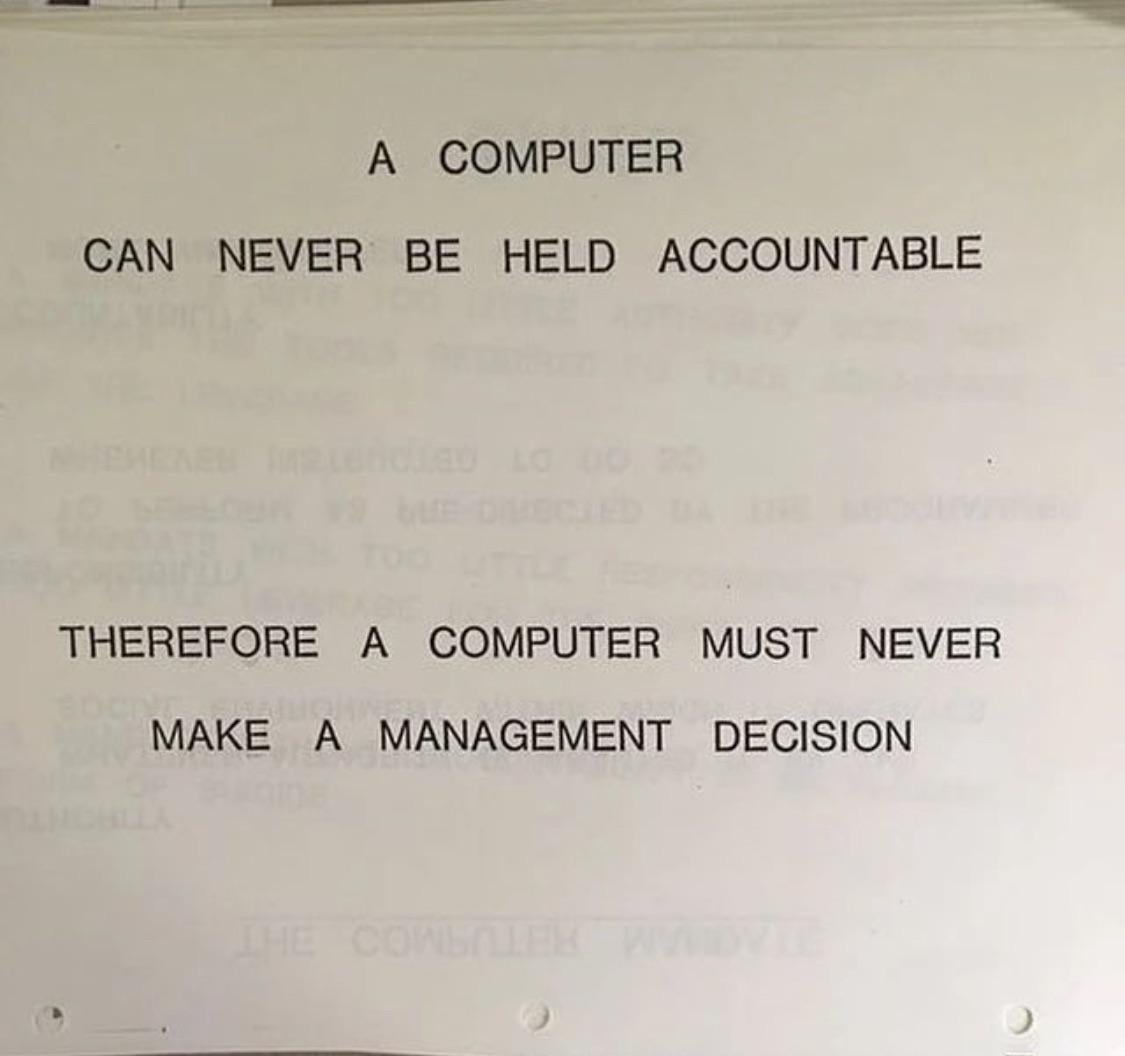
- Akuity: a GitOps platform, Akuity recently launched a control plane for agents, and one of its primary functions is binding agents explicitly to humans for accountability purposes – hence the image above.
Hardware
- Pamir.ai: SF-based hardware startup building agent-specific hardware. Its tagline is literally “Stop sharing a computer with your agent. Your agents deserve their own computer.” AMD, for what it’s worth, sells its own “Agent Computers.”
PaaS
- Netlify: coined the term Agent Experience (AX) to describe the equivalent of Developer Experience (DevEx) but for agents.
- Vercel: in announcing its Series F funding, the company talked about replicating its original product goals, but reimplementing them for AI, in part through an SDK for agents. Again, the agents appeared to have responded. In January, Vercel reported that less than three percent of deployments were triggered by agents. By June, that number was more than half.
Retail
- Shopify: for six years, Shopify leveraged React Native for its mobile apps because building native apps was too difficult and time consuming. Its use of agents has changed that calculus, and Shopify is now moving away from React Native and building native apps per platform. Agents, in other words, have triggered a tectonic shift in the choice of mobile frameworks for one large former user.
Sandboxes
- E2B: as of this past June, the company reported over one billion sandboxes launched.
Security
- XBOW: built by some of the same people who created the original Copilot, XBOW doesn’t need to adapt its product for an agent-centric world because the agents are the product.
Version Control
- Pierre: Pierre’s code.storage is essentially headless GitHub but for agents (and their scale), not humans.
There are dozens if not hundreds of other examples of companies building for an agent-centric world – Stripe and its Agent Commerce Protocol (ACP) and Cloudflare’s pending Wallet for agents are two – but the clear trajectory makes them unnecessary. Agents are here, they’re growing and they are a market force.
Consider the emerging Sandbox application category: from players like Cloudflare, the aforementioned Daytona, Docker, E2B, Modal and now Vercel, the entire market is an artifact of and would not exist without agents. Developer tooling built for humans was built on an assumption that they will operate within acceptable boundaries of behavior; developer tooling built for agents assumes the opposite. Sandboxes exist to give the exploding number of agents more autonomy, while not trusting them.
The question ultimately isn’t whether agents and tooling to support them will have a market. It is rather whether that will come at the expense of, or in addition to, markets for human developers.
Which in turn suggests another question: if agents are the new New Kingmakers, what does that make developers? The optimistic answer, for those developers that have agency in selecting the models used, is emperors. The pessimistic answer, on the other hand, is a role with considerably less agency: mere advisor to the queen or king. For the pessimistic, however, it’s worth remembering where the agents originally got their “opinions” from: the New Kingmakers that preceded them.
Whatever conclusion one comes to, the reality of the agent-driven world is materially different than the human world that preceded it. Successful Developer Relations campaigns were about persuading and negotiating with large developer populations. Agent relations, however, will require influencing a small number of models, one that can likely be counted on two hands. Further, the “choices” these models make are highly likely to become significantly more conservative and less diverse than those made by the millions of developers they learned from. In part because the math of dramatically fewer players making choices inevitably implies fewer total choices, but also because popular technologies offer more material to train on and advantage incumbents – even in a market in which switching costs are approaching zero.
Ultimately, much as the original New Kingmakers dramatically reshaped the industry around them, so too are their would be inheritors. And as with all things AI – it’s happening at an incredible, comically accelerated pace.
If you’re wondering what the new queens and kings will be, then, your best bet may be to talk to an agent.
Disclosure: Cloudflare, Docker, GitHub, Google (DORA) and Microsoft are RedMonk clients. Akuity, AMD, Databricks (Neon), Daytona, E2B, Meta (React Native), Modal, Monid, Netlify, Observable
OpenAI (ChatGPT), Pamir.ai, Pierre, Shopify, Stripe (OpenRouter), Tabnine, Vercel and XBOW are not currently clients.

No Comments