In recent months something has shifted with RedMonk’s weekly podcast, The MonkCast. Our subscriber count on YouTube, Apple podcasts, and Spotify has quietly grown, and I think it’s worth pausing to reflect on how we got here—and where we’re going.
I’ll be honest. My love of podcasts started out of necessity. When you’re the caregiver of two small children, hands-free media consumption is a requirement, not a preference. A big part of my role at RedMonk is staying current on tech news and trends, and I found that podcasts were simply a more sustainable format for me to keep up with than scrolling social media, reading blog posts, or sitting down to watch videos. They fit into the margins of the day in a way nothing else could. My kids are a little more self-sufficient now, but my conviction that podcasts are a superior format has only deepened.
RedMonk isn’t new to audio-first content. Stephen O’Grady ran a podcast called Hark for years, and the MonkCast carries forward its spirit of compelling conversations with sharp people. What’s changed is the cadence (minimum of weekly, sometimes 2x a week), the scope, and honestly, the tools.
What Makes the MonkCast Possible?
I call the MonkCast a “gonzo production,” and I mean that affectionately. Like many things at RedMonk, it’s community-driven, authentic, and heartfelt—but it’s not a studio operation. I have always taken an interest in the cinema. In fact, I took filmmaking classes in art school during my BFA at the University of Cincinnati. However, my circa 2005 Final Cut productions testify more to my enthusiasm than my expertise. For many years enthusiasm only got you so far, but not so today! Today, we have Riverside.
I spearheaded the initiative to revamp RedMonk’s podcast presence for several reasons, which I’ll get into here soon, but a big one is that the tools are genuinely excellent now. I use Riverside for pretty much everything—recording, production, publishing—all in one place. I have strong opinions and can complain at length about the myriad ways Riverside has wronged me, but at the end of the day this SaaS product removed the parts of podcasting I dreaded most.
And Riverside keeps improving. Let me offer one example. Early on in the MonkCast, I was still downloading episodes and uploading them to iMovie to add music. Friction breeds failure, and I experienced this first hand. I once exported and published the music track without the rest of the episode. Whoops. I wish I could say that was the only time something like that happened, but I’m happy to report that was my worst gaffe (so far!).
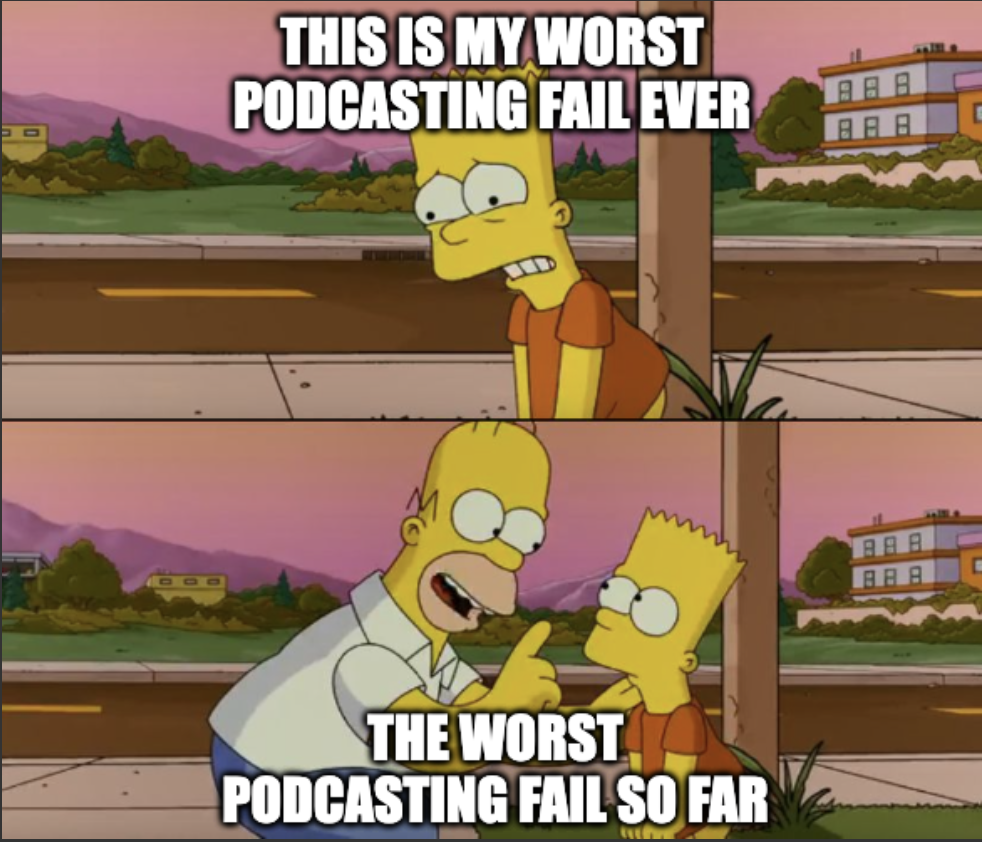
Mercifully, I can now add music directly on Riverside’s editor—a new workflow that has eliminated this overhead, and, taken with other improvements, removed some of those opportunities for embarrassing errors.
Our Guests
The second reason I lobbied to re-up RedMonk’s podcast presence with the MonkCast emerged from a hunch. RedMonk talks to the most interesting people in the technology space every single day. When I joined in 2022, it didn’t take long to realize that the conversations happening privately were the kind of conversations the broader community would want to hear. Keeping them internal felt like a missed opportunity. So myself and the other analysts began slowly inviting friends to share these stories on RedMonk’s YouTube channel, and eventually we launched our audio only channel.
I want to shine some light on how the analysts select guests because we have been, frankly, swamped with guest placement requests. I receive between 2 and 4 external requests per week, which is a lot for a weekly show. This is a good thing! We are humbled and grateful for the interest and attention. But it means that I have been sending a lot of “No thank yous.” So let me devote a little space to clarifying how we choose guests.
A few different motivating factors tend to drive the decision:
Friends and collaborators. Sometimes we just invite people we like to have an unstructured conversation. This was the initial inspiration for the show, and still drives a good percentage of the episodes we release. The logic here is simple: interesting people reliably have interesting things on their minds.
Breaking news. When something significant happens in our community, we’ll sometimes reach out to the person at the center of it. Deb Nicholson, executive director of the Python Software Foundation, came on to discuss the PSF’s decision to decline an NSF grant over its DEI requirements. Ryan Dahl, creator of Node.js and Co-Founder and CEO of Deno, joined to chat about the petition filed by Deno to cancel Oracle’s JavaScript trademark. These are the kinds of conversations that belong in the public record, and the MonkCast gives us a platform to have them.
Research, in both directions. I often use MonkCast conversations as primary material for larger research projects by citing these conversations in my written blog posts as evidence. But I also work the other way. After publishing something, I’ll reach out to someone to discuss it, and the meta-conversation around the piece becomes content in its own right. A clear example of this is when Daniel Stenberg guested on the MonkCast to talk about my article, AI Slopageddon and the OSS Maintainers. He had engaged with my blog post on LinkedIn, and after we connected, it was a natural fit to invite him on the podcast to discuss it. This kind of conversation, where the research and the interview feed each other, is some of my favorite content we’ve produced. In this case, I was even inspired to create The Generative AI Policy Landscape in Open Source data visualization afterwards because I realized Daniel’s curl project is just one data point in the larger conversation, and I needed a more robust survey that took lots of projects into account. In a real sense, the MonkCast operates as a flywheel: our research brings guests, and guests spur new research.
Sponsored episodes. The MonkCast is a strong channel for reaching RedMonk’s audience, and we’ve had real success bringing clients on to talk through what they’re working on with our analysts. What works about this format is that it’s a genuine conversation, not a polished marketing artifact. RedMonk doesn’t write MBA-style white papers, and the MonkCast fits our voice in the same way. Sponsored episodes can work like any of the aforementioned guest categories, as the script is invariably a collaboration between client and analyst. We’ve recently opened up sponsored episodes to non-clients as well, and we’re excited to offer this new, more flexible way to participate on the podcast.
Onwards!
During COVID lockdown, much of the work RedMonk has always done shifted online. The analysts began creating more video work during this period, and this momentum has not abated. My colleagues Rachel Stephens, Stephen O’Grady, James Governor, and I have been recording some killer episodes of the MonkCast and we’re jazzed to keep this momentum.
Our growth in terms of subscribers and guest interest is heartening. It is a vindication of a broader bet that the format matters, while also suggesting the strength of RedMonk’s community. We couldn’t do what we do without our partners and friends. There’s an audience for thoughtful, expert-driven conversations in tech that doesn’t require the sometimes hollow sheen of a hyper-produced show, or the noise of social media influencers. The MonkCast is trying to be that kind of worthwhile experience: smart, a little rough around the edges, and genuinely worth your time.